From 2-7 March 2025, the RCAAE hosted its annual training course for alpine land managers at Falls Creek in north-east Victoria. This year, the focus was on Caring for the Alps– the protection of alpine landscapes, communities and species. Twenty land managers – from the ACT, NSW and Victoria attended – comprising predominately staff from alpine resorts and national parks. Participants were initially introduced to theory (concepts such as reading landscapes, land capability, peatland function) before having the opportunity to learn some practical skills in the field. A highlight was the development of a rehabilitation plan for a landscape in the national park modified by hydro construction work at Pretty Valley almost 70 years ago. The aim is to now take the initial site assessment and schedule of works developed by participants, and to turn it into a plan of action that can be implemented by future Course participants. Watch this space!!
During the week, in formal and informal discussion, it was clear that there is a strong desire to see better management and rehabilitation of alpine ecosystems. As was noted by many, management actions (such as removal of cattle and deer in recent decades, along with sustained targeted weed control) have led to major improvements in vegetation and catchment condition. But with ongoing disturbance (development, recreation, fire), as well as historic landscape scars (from previous hydro works), best-practice rehabilitation will need to be embedded into future management of high mountain ecosystems to maintain (and enhance) their condition. On the last morning, participants discussed how this might be done, and what ‘game-changing’ approaches might be implemented to elevate rehabilitation principles to become ‘the norm’ in alpine management. Developing a network of practitioners was a common theme that emerged – again, watch this space for developments!
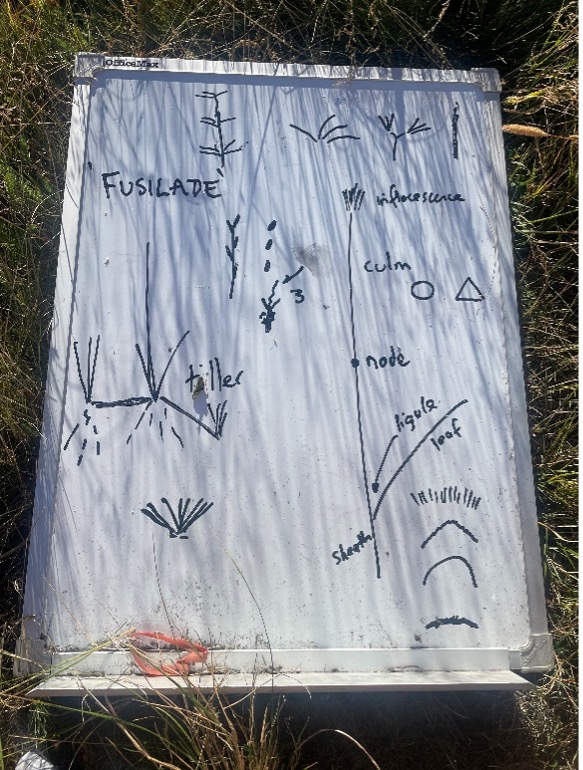
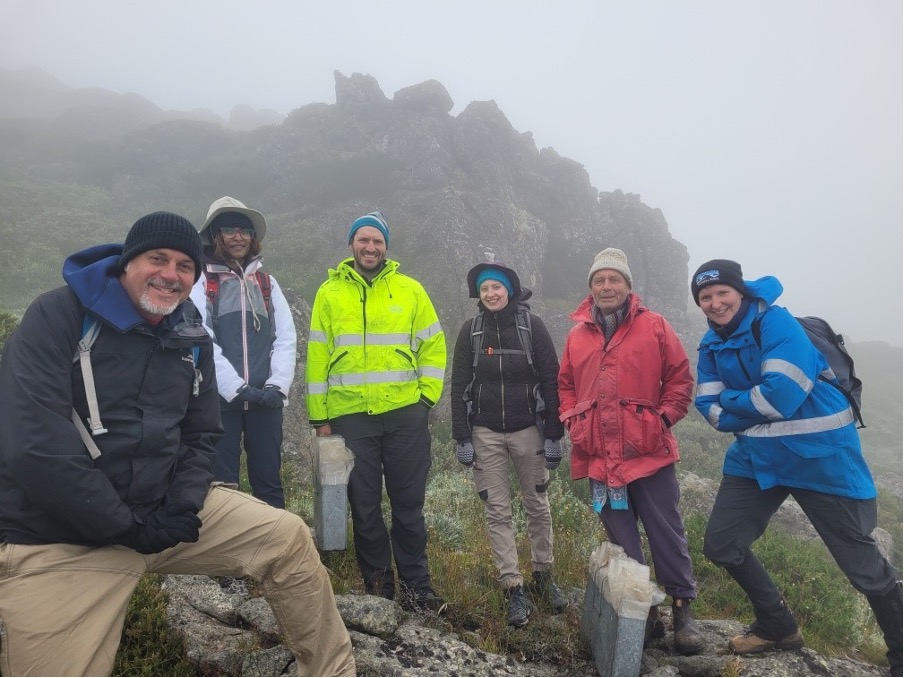
The Pretty Valley rehabilitation site challenged participants to think about soil and microclimatic factors that need to be alleviated to enhance rehabilitation of native vegetation.Participants discuss ways to enhance uptake of rehabilitation practices in their workplace, focusing on key principles taught during the Course.Practical skills, like ‘how to identify weedy grasses’ were emphasised during the Course.
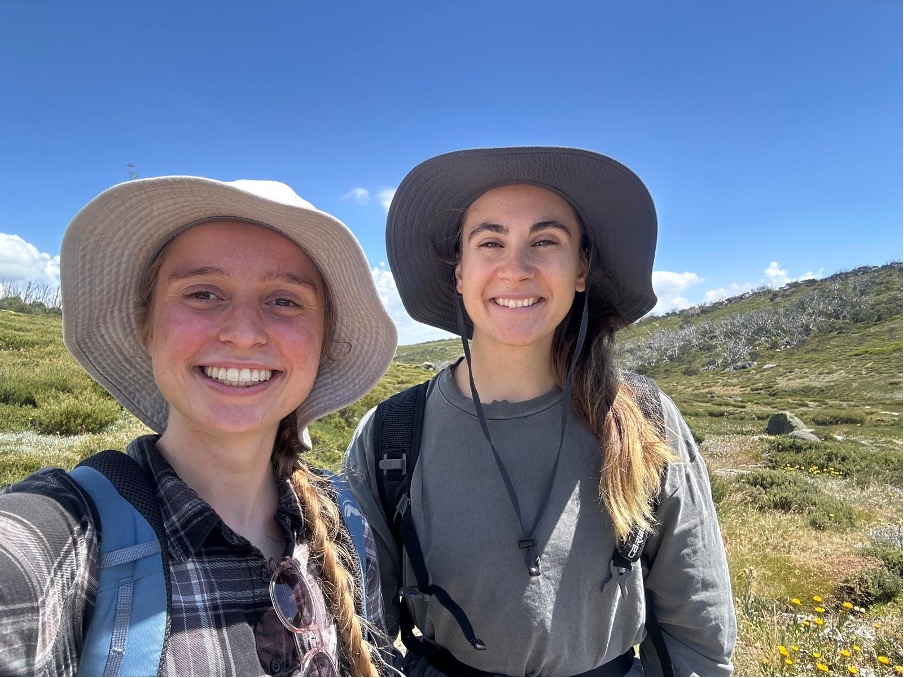
Each year, the RCAAE offer summer Research Opportunities for Undergraduates. Typically, students work with Centre scientists on a range of research projects, including long-term monitoring, rare plant ecology, climate change and weed invasions. They are based at Falls Creek for 4 weeks, living and breathing the life of a field biologist. In 2025, Elissa and Hayley worked with the Centre; here’s a brief reflection of their time in the Alps.
Hayley Perkins (left) and Elissa Nicolaci (right), on the Bogong High Plains, January 2025
Our time spent in Falls Creek working with the Research Centre for Applied Alpine Ecology was such an incredible learning experience. We’ve developed strong plant identification skills, learning to recognise a wide range of alpine species from a variety of plant families. Conducting floristic studies introduced us to an array of ecological surveying techniques, and we’ve developed other important field skills, like navigating to study sites and plots using maps and a compass.
This opportunity has also given us valuable insights into the research process. Seeing firsthand how ideas and observations are developed into further research and experiments was fascinating. The starting point for any ecological study is observation – we now feel much more capable of ‘reading the landscape’ and understanding how to ask a question. We also gained practical skills in data entry and simple analysis, and a greater understanding of how fieldwork connects to broader scientific inquiry.
What we enjoyed the most was hiking to remote study sites and building the confidence and capability to conduct independent fieldwork. Learning plant ID and ecological concepts deepened our appreciation for the region and exploring places we might never have visited otherwise has sparked a passion for the Alps and a strong desire to contribute to its protection and future research. We highly recommend any student with an emerging passion for plants, landscapes, ecology and nature conservation to apply for future summer research student opportunities.
Hayley measuring the girth of a long unburnt snowgum near Mt Jim
The RCAAE extends a big congratulations to Iris Hickman on the completion of her Masters, which investigated long-term vegetation dynamics of mountain summits in the Australian Alps. You can find Iris’ thesis along with other RCAAE theses on our Resourcespage
Iris Hickman
Climate warming and altered disturbance regimes are expected to drive the spread of warm-adapted species into alpine ecosystems, threatening unique, endemic plants. While much of the evidence on plant distribution shifts comes from revisiting sites in the Northern Hemisphere, similar studies in the Southern Hemisphere, especially in the Australian Alps, remain scarce.
My thesis investigates the long-term responses of alpine vegetation on summit areas in the Australian Alps over 18 years. By revisiting 14 alpine summits with permanent plots established in 2004 and 2012, my research tracks vegetation changes through resurveys in 2012, 2017, and 2022. The study focuses on the role of climate change, fires, and local microhabitats in shaping plant dynamics.
Key findings include:
Longer growing seasons have increased the cover of shrubs and grasses.
Fires in 2007 temporarily boosted the growth of forbs and grasses due to post-fire succession.
Vegetation changes vary by elevation, with higher elevations seeing more pronounced shifts in plant composition.
There is limited evidence of new species migrating upslope, suggesting some resistance to climate change.
While alpine ecosystems may show resilience in limiting novel species, ongoing threats like climate change, invasive species, and fire pose challenges for their future stability without urgent action.
In a rapidly changing climate, many natural ecosystems are facing unprecedented challenges. One such ecosystem are early-melting snowpatch plant communities, those communities that form where snow persists longest into the growing season in high mountain environments. In Victoria, these communities are numerous, but small in extent, distributed across the length of the Bogong High Plains. RCAAE members John Morgan and Zac Walker have just published new research (in the journal Scientific Reports) that sheds light on how these communities are transitioning into novel states due to climate change, presenting both challenges and opportunities for conservation and ecological understanding.
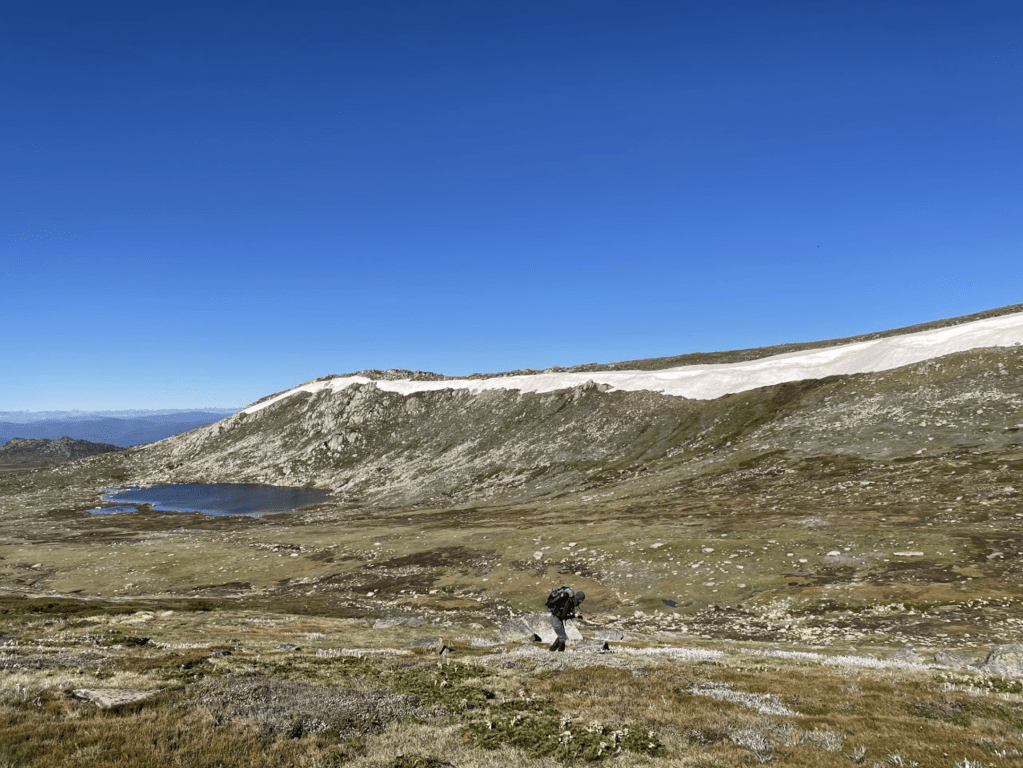
Snowpatch plant communities are found at the highest elevations in Australia, typically on south-eastern facing slopes where winter snow has accumulated into deep drifts. As such, these areas have very short growing season when the snow finally melts in summer, are protected from spring frosts, and often have higher soil moisture than surrounding areas due to the slowly melting snow. These snowpatches act as ‘life rafts’ for a unique set of plants and invertebrates that are restricted to these communities. However, climate change is altering the dynamics of snowpatches, with reduced snow cover and earlier snowmelt becoming increasingly common.
Snowpatches, characterised by snow melting well after it does in the surrounding landscape, are characterised by herbaceous plants (grasses, herbs) that have short-growing seasons to complete their annual growth and flowering.
Morgan and Walker’s research reveals that as snowpatches melt earlier, the plant species composition within these communities is changing. Snowpatch species are persisting (that is, species are not yet going locally extinct) but a whole gaggle of new species, better suited to longer growing seasons, are making their way into snowpatches, changing both the composition and structure of these communities. The ‘new’ species includes tall native shrubs that abound in the broader landscape but are typically rare in snowpatches, and many herbaceous plants that have dispersed by seed from the adjacent plant communities. As such, the dominant processes in snowptaches are about immigration of new species, with an apparent lag in the loss of snowpatch specialists. This is leading to the emergence of novel ecosystems with unique species compositions and a vegetation structure that resembles a heathland moreso than the short herbfield structure that typically characterises snowpatches.
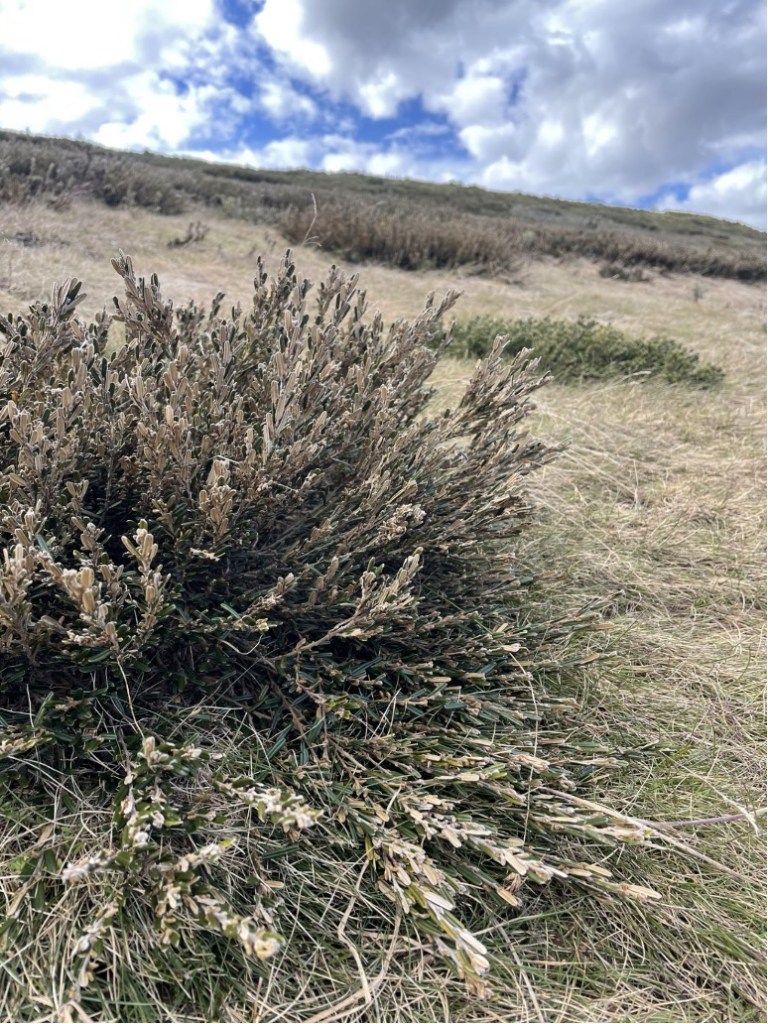
Shrubs are becoming more common in snowpatches, a result of earlier snowmelt. These grow taller than snowpatch specialists, and may ultimately out-compete them for space and light.
The research highlights the complex and dynamic nature of snowpatches in the face of climate change. While these communities are transitioning into novel states, the implications for biodiversity, conservation, and ecological understanding are profound. There is an urgent need to address climate change and its impact on alpine ecosystems but in the short-term, adaptive conservation strategies are necessary to ensure the survival of these unique plant communities. Such strategies might include removing the encroaching native shrubs that will likely overtop the smaller, less competitive snowptach species. Alternatively, perhaps managers may build snowfences above snowpatches to ensure that even more (of the increasingly marginal) snow deposits into snowpatches and allows later meltout than is currently being observed.
Reference:
Morgan, J., Walker, Z. (2023) Early-melting snowpatch plant communities are transitioning into novel states. Scientific Reports13, 16520. https://doi.org/10.1038/s41598-023-42808-5
Ongoing changes in global climate are altering ecological conditions for many species and the consequences of such changes are most evident at the edges of the geographical distribution of species. Alpine plant species’ distributions are shifting to higher elevations in response to climate change. Most evidence for upslope migration of alpine plants comes from the northern hemisphere, with relatively limited evidence for elevational shifts in southern hemisphere plants. To address this knowledge gap, Auld et al. (2022) used historic data (herbarium records, field observations), combined with a recent field survey, to determine if alpine plants in Australian high mountains have migrated upslope over the last two to six decades. By comparing historic records with their new survey, they suggested that plant elevational shifts were occurring, with ~30% of species (n=36 species in the study) showing evidence for upslope movements. Five species were suggested to have contracted their range, and two had expanded their range.
While the evidence presented in Auld et al. (2022) suggests that range changes may be occurring over time – with change couched as species’ mean, upper and lower elevation shifts – such data cannot (by themselves) attribute change to any specific mechanism(s). The authors codify their primary question in terms of climate change (more specifically, increasing temperatures) but there are other explanations for the changes observed that do not invoke climate change responses.
Australian alpine landscapes have been subjected to a century (or more) of ungulate grazing by domestic stock, and associated burning practices (Good 1992), with significant impacts on wetland, grassland and heathland structure and composition. Grazing in the Kosciuszko National Park (KNP) was banned 70 yrs ago. Recovery of alpine species and ecosystems from decades of prior disturbances has been well-studied in Australia (Carr and Turner 1959; Costin et al. 1979, Wahren et al. 1994; Scherrer and Pickering 2005). Wahren et al. (1994), for example, show that recovery of grazing-sensitive alpine grassland species was still continuing more than 45 yrs after cattle grazing was excluded. In KNP, livestock grazing caused the major decline of palatable species (such as grasses and herbs), while grazing and fire led substantial soil erosion in wetlands and herbfields. Indeed, soil erosion of the catchment was so bad that rehabilitation of groundcover condition was a key focus for 30 yrs after the cattle were removed (Good 1992). Hence, the historic elevation range captured by historic records used in Auld et al. (2022) are a range that encapsulates species recovering (some quickly, some slowly) from past disturbances, i.e. it may not represent the species’ climatic distribution but rather, likely captures the impact of land use that made many species rare in the landscape.
Several plant species are known to have been much reduced in extent due to cattle grazing. For example, Costin et al. (2000) note that Chionochloa frigida, a tall tussock grass, was “common on the eastern slopes of Kosciuszko but with grazing and burning it almost became extinct there by the 1930s. Since 1944, when the Kosciuzko summit area became protected from grazing, C. frigida has been recovering”. Ranunculus anemoneus is shown by Auld et al. (2022) to be moving downslope, but this is just as likely a landscape recovery from refuge areas amongst rock outcrops after cattle grazing (Good 1992) as it is to climate change. Separating out the relative contribution of these factors is difficult, but evidence hints that several of the changes observed over recent decades should be couched as landscape recovery change via dispersal and regeneration. Costin et al. (2000) suggest that “prior to the cessation of livestock grazing, R. anemoneus was almost grazed out of existence, but is now making a spectacular recovery”. Good (1992) echoes this sentiment: “… species are now slowly but actively recolonising available areas of previous habitat”. Clearly, the historic records for this species do not necessarily reflect the historic (climatic) distribution of the species, and any changes thereafter may reflect ongoing recovery as population numbers increase and expand back across KNP.
Ranunculus anemoneus is one of the species that has made a spectacular comeback after the banning of cattle grazing from the Main Range of Kosciuszko National Park. Recovery from land use makes it hard to decipher the contribution that climate change has made relative to the role of recolonisation of what was once previously occupied habitat.
Attribution of causes of change in plant species distributions will remain problematic when land use legacies are at play. While it is logical to think that alpine plants are primarily responding to climate drivers (and appear to be doing so in the northern hemisphere), the situation is likely more complex. Many of the examples of elevational range shifts in the northern hemisphere are species moving into a contracting nival zone where new habitat is becoming available for species to establish. In Australia, mountains are covered in vegetation due to deep soils and opportunities for new species establishment outside of their range, due to climate change, may be more limited. Interestingly, it may be that disturbances from feral ungulates, fire and people are the factors that accelerate these changes in the future. Hence, understanding the interplay between climate and other drivers becomes essential to better forecast the future of alpine plants in Australia. This is best achieved by permanent plot studies, ongoing systematic collection of herbarium specimens, careful consideration and of interpretation of landscape history, and well-designed experiments that can account for the milieu of biotic factors that affect species distributions.
The Main Range in the Kosciuszko National Park is an example of Australian mountains that are covered in vegetation due to deep soils. They have also been exposed to over a century of a stock grazing that had profound effects on alpine plant species abundance.
References
Auld, J., Everingham, S. E., Hemmings, F. A., & Moles, A. T. (2022). Alpine plants are on the move: quantifying distribution shifts of Australian alpine plants through time. Diversity and Distributions 28, 943– 955. https://doi.org/10.1111/ddi.13494
Carr, SG.M. & Turner, J.S. (1959) The ecology of the Bogong High Plains. II. Fencing experiments in grassland C. Australian Journal of Botany 7, 34-63.
Good, R.B. (1992) Kosciusko heritage. National Parks and Wildlife Service, Hurstville.
Scherrer, P. & Pickering, C.M. (2005) Recovery of alpine vegetation from grazing and drought: data from long-term photoquadrats in Kosciuszko National Park, Australia. Arctic, Antarctic, and Alpine Research 37, 574-584.
Wahren, C-H.A. , Papst, W.A. & Williams, R.J. (1994) Long-term vegetation change in relation to cattle grazing in sub-alpine grassland and heathland on the Bogong High-Plains: an analysis of vegetation records from 1945 to 1994. Australian Journal of Botany 42, 607-639.
After a five year hiatus due to bushfires and covid, the Alpine Ecology Course (AEC) was once again run at Falls Creek (5-10 March 2023). The AEC has been running since the late 1980s; it was developed to provide participants with a better understanding of the ecology of alpine ecosystems so that they can be better managed. Over that time, around 1000 participants have been through the program.
In 2023, 28 course participants – spanning the ACT, NSW and Victoria, from a range of roles including an outdoor education teacher, national park rangers, forest managers, ski resort workers, and a member of a traditional owner corporation – were exposed to the flora, fauna, soils, geomorphology and disturbance ecology, using the Bogong High Plains as the teaching laboratory. The week started with a welcome to country, including a smoking ceremony, by traditional custodians who then stayed with us for the remainder of the week to talk about their aspirations for the land.
Field instruction and excursions underpin participant learning, supplemented by some evening seminars. Participants were led by instructors including Neville Rosengren, who described the evolution of the mountain landscape, and introduced terms such as peri-glacial, solifluction, denudation and block streams. Keith McDougall focused on plants and vegetation survey methods. Michael Nash introduced biosecurity (through the lens of slug invasions) and championed insects as the ”unseen windmills” of the alps, while Dean Heinze and Ian Mansergh updated participants on Mountain Pygmy Possum and Bogong Moth ecology. Sam Grover focused on soils, particularly peats, assisted by Ewen Silvester who added important understanding about hydrology. John Morgan reminded participants about snow – one of the most prominent features of high mountain landscapes – and how its decline might imperil some plant communities. Dick Williams focused attention on the recent fires, and what can be learnt by considering the fire regime.
Participants learnt lots that can be taken back to their own landscapes and, importantly, made connections with their peers. This network can only help better support those in charge of alpine landscapes to ensure best-practice management is being implemented. Plans are underway to run the course again in 2024. Updates will be provided here in the Ecology Course tab. Calls for registration will be made later in 2023. Stay tuned.
Ecologists from the global Mountain Invasion Research Network (MIREN) – including members of the RCAAE (John Morgan, Keith McDougall, James Shannon) – found that the number of non-native plant species in mountainous regions around the world has increased over the last 5-10 years, and that already established species are rapidly spreading to higher elevations.
Compared to lowland ecosystems, mountains have been less invaded by non-native plant species. However, with climate warming and increasing human pressure at high elevations, this situation is changing. While upward movements of native species in mountains are well recognized and relatively well documented, long-term studies on non-native species in mountainous regions are rare. To fill the gap, a global network of researchers has been monitoring non-native species along mountain roads since 2007. Now, a first assessment of the ongoing spread of non-native plants in mountains across continents has been published in Nature Ecology & Evolution.
The long-term study reveals increasing numbers of non-native plant species in high mountains.
Overall, the study found a significant increase in non-native species richness (approximately 16%) in mountains over the last 10 years. Considering that ecological processes such as the establishment of new species and range expansion often take place over long periods of time, the increase in the number of detected non-native species within a decade is surprising and alarming. However, as the trends greatly varied among the eleven regions included in the study (New South Wales and Victoria [Australia], Central and South Chile, Hawaii, India, Montana and Oregon [USA], Norway, Switzerland and Tenerife), the overall increase in species richness could only be detected by pooling observations from multiple regions, highlighting the importance of globally replicated studies to detect temporal trends within short time periods.
The upward movement of non-native species was mostly at lower and mid elevations.
The invasion of mountain ecosystems is not only marked by an increasing diversity of non-native species, but also by an upward movement of species already present when the survey started. Moving to higher altitudes and latitudes to follow their preferred temperature is a well-known escape strategy for plants in times of global climate warming. Indeed, the analysis of the upper range limit changes within the study period revealed range expansions occurring in 10 out of the 11 surveyed regions. However, as non-native species are often initially introduced in the lowlands, from where they find their way into the mountains, an upward spread can be expected even without the effect of climate warming. This corresponds with the finding that in some of the surveyed regions, change was only detectable for species occurring in the lower or middle part of the surveyed elevational gradient. Nonetheless, climate change might enhance the upward spread of already established species, emphasizing the need to monitor their movements and prevent any negative consequences in high elevation ecosystems.
The Research Centre for Applied Alpine Ecology recently supported a nomination to list ‘Maisie’s Plots’ as Sites of State cultural significance due to the important role they have played in the science of alpine ecology. The Heritage Council of Victoria has now included ‘Maisie’s Plots’ in the Victorian Heritage Register pursuant to the Heritage Act 2017. ‘Maisie’s Plots’ are two non-contiguous areas of land about 1 km apart that have been used for long-term ecological monitoring and experiments since the 1940s. The Rocky Valley Plots were first sampled in 1945, and the Pretty Valley Plots in 1947; they have been sampled every 5-10 years ever since. The next sampling occurs in January 2023.
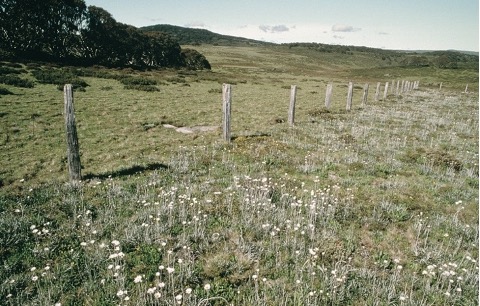
View from fenced (ungrazed) plot to unfenced (grazed) plot, 1992. Source: Dr Henrik Wahren, Research Centre for Applied Alpine Ecology, La Trobe University.Aerialview of the Pretty Valley Plots, 1992. Source: Dr Henrik Wahren, Research Centre for Applied Alpine Ecology, La Trobe University.
About Maisie Fawcett, and the history of her high country research
Stella Grace Maisie Fawcett (later Mrs Maisie Carr; 1912-1988) was a botanist and ecologist born in Melbourne.
Fawcett’s High Country studies commenced in 1941 – during the Second World War! In 1940 the Soil Conservation Act established Victoria’s new Soil Conservation Board (SCB). At the time the members of the Board were very concerned about condition of the Hume Catchment, particularly the high plains, much of which had been burnt in 1939, and which was used extensively for free-range cattle grazing. Today the damaging impact of cattle grazing on the ecology of the High Country, including patterns of soil erosion, is well understood. But in the early-mid twentieth century, there was little scientific evidence to conclusively demonstrate this. More research was needed to protect water catchment areas and dams so that siltation did not become an expensive problem for government water projects.
The SCB instigated an investigation into soil erosion and ecology of the High Country in 1941 in collaboration with Professor John Turner, Head of the School of Botany at the University of Melbourne. He selected eroded areas near Omeo in the Hume catchment area for research. He needed a skilled ecologist to undertake the fieldwork. At this time, the High Country was a remote and rugged part of Victoria: some areas were only accessible on horseback and communication by telephone was limited. Given these difficult conditions, it was initially thought that a man was best suited to the job of conducting the research.
It was wartime, however, and male ecologists were in short supply. The SCB arranged with Professor Turner for Maisie to undertake an ecological survey of Hume Catchment. At the time Maisie was a post-graduate student, but Prof. Turner convinced the Board that she could capably undertake the work. This was initially via a research grant to the Botany School, but in 1944 Maisie was appointed as the first research officer of the Soil Conservation Board. She extended her activities to cover all the High Country in the Hume Catchment, including the Bogong High Plains.
From September 1941, Fawcett moved to Omeo. As part of her pasture regeneration studies, she had large areas fenced to exclude stock on the steep eroded slopes of Mt Mesley and Mt Livingstone. In these exclosures she recorded vegetation changes and also stream flow and siltation rates. Fawcett travelled extensively on foot and horseback across the hilly Hume Catchment area becoming familiar with the Alpine environment and its particular ecology. Being a city-bred woman, a scientist, a representative of the University and the SCB was not easy in a rural community. Fawcett overcame entrenched conservative attitudes, wartime shortages, physical exhaustion and challenging terrain and weather conditions.
During her time at Omeo, Fawcett became aware that soil erosion in the Bogong High Plains to the northwest of Omeo could potentially threaten the Hume Catchment, including and the new Kiewa hydro-electric scheme which had been under construction since 1938. In 1944 Maisie accompanied members of Board to assess obvious deterioration of grazing values and incidence of erosion on the Bogong High Plains. On Maisie’s recommendation, and at the request of the SCB, the State Electricity Commission (SEC) fenced the Rocky Valley and, later, the Pretty Valley experimental monitoring sites on the Bogong High Plains. This arrangement (i.e. two study areas) was necessary so that soil and vegetation measurements could be made over the full range of plant associations on the Bogong High Plains.
Rocky Valley Plots
The large fenced exclosure at Rocky Valley was established in 1944-45. The exclosure included the headwaters of a first order stream and its associated peatland vegetation, and various other vegetation types such as heathlands and herbfields. The fence excluded cattle, and the nearby unfenced control areas allowed cattle to graze freely. Within the exclosure, 500 m2 permanent sample plots with permanently marked transect lines were established in open heathland, closed heathland and herbfield. Similar sample plots-with-transects were established within comparable vegetation types in the unfenced, control area.
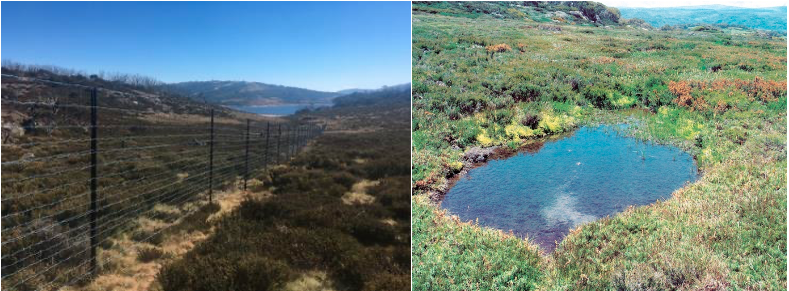
Rocky Valley Plots Left: View north-west along deer-proof fence, erected in 2019 along original,1940s fence line. Fenced, (Ungrazed) plot to the right. Source: https://rcaae.org/2019/05/09/protecting-the-past-by-ensuring-its-future/ Right: Pool in mossbed/peatland within the fenced (ungrazed) plot, in 1982. Photo: Colin Totterdall, CSIRO.
Pretty Valley Plots
In 1946 Fawcett selected land for sites on the edge of Pretty Valley (a grassland area). The exclosure was fenced in 1946 to exclude cattle, along with an unfenced control area in which cattle could graze. The Pretty Valley plots were established because the type of grassland present there was not well-represented at Rocky Valley. Permanently-marked transects were established in the exclosure and the adjacent unfenced area.
Fawcett’s investigations and findings were not always welcome. She criticised the cattlemen’s frequent burning of vegetation. That said, Maisie slowly and consistently won the respect of cattlemen, of SCB members and others by speaking not only from her love for the High Country, but from the clear, uncluttered evidence that the land itself was revealing. In 1949 Fawcett became a lecturer in systematic botany and ecology at the University of Melbourne and continued her research at the Alpine plots. Fawcett’s findings – that summer grazing was detrimental to the sustenance of native vegetation and encouraged soil erosion – were published in 1959, co-written with Professor Turner, in the Australian Journal of Botany. Her classical observations of shrub ecology were published in 1962 in the Proceedings of the Royal Society of Victoria. The Rocky Valley and Pretty Valley plots have been monitored ever since. The compelling evidence provided by these long-term, longitudinal studies, and Maisie’s ecological insights, contributed to the controls on grazing that commenced in the 1940s, further restrictions on grazing in the 1980s following the establishment of the Bogong National Park, and the cessation of all licenced grazing in the Victorian Alpine Park in 2005.
Pretty Valley Plots. Left: Interpretative Signage, 2022. Source: Heritage Victoria. Right: The plots in 2009 (Note burnt vegetation). Source: https://rcaae.org/
Maisie’s Legacy
Maisie’s Plots are thought by many within the scientific community to be one of the foundations of Australian ecology. The plots at Rocky Valley and Pretty Valley were among the first such exclosures in Australia. They are one of the longest running ecological experiments in Australia. They are amongst the longest continual grassland monitoring projects in the world. Prior to the 1940s there had been only a handful of exclosure projects in Australia. When most of Australia’s few ecologists were male, Maisie Fawcett undertook ground-breaking ecological research into plant-environment relationships that revealed unequivocally the damaging effects of cattle on the vegetation and soils of major Australian water-catchments. Maisie Fawcett was a gifted scientist and pioneering ecologist who grasped opportunities that took her to the forefront of her field. ‘Maisie’s Plots’ contributed to early, foundational scientific assessments of the significance of the Australian Alps and land-use therein. The vegetation in and around the plots continue to be studied by new generations of scientists and are yielding new information about the ecology of the Australian Alps.
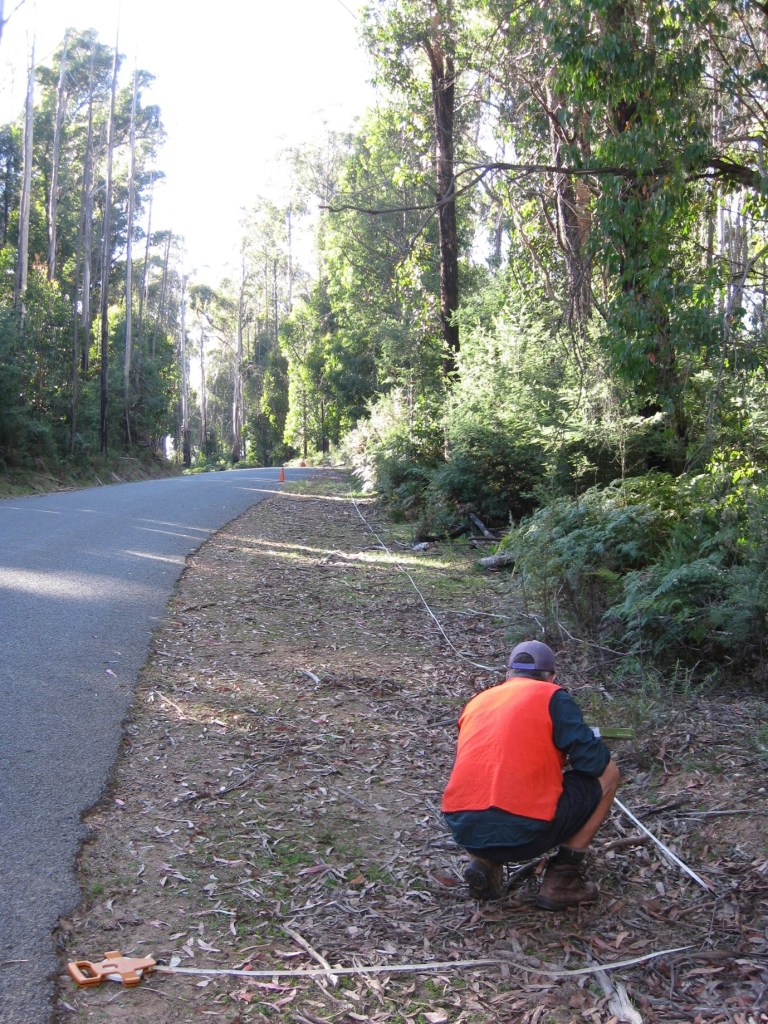
In the summer of 2021-2022, RCAAE members Keith McDougall and Neville Walsh led the fourth survey of roadside weeds in Kosciuszko as part of the global MIREN-initiative. In Victoria, a similar resurvey of roadsides was undertaken by RCAAE members John Morgan, James Shannon, Zac Walker and Alex Blackburn-Smith.
The following text written by Keith McDougall discusses the highlights from the Kosciuszko surveys. More information on the MIREN surveys can be found at https://www.mountaininvasions.org/
Genevieve Wright, Neville Walsh and I set out in early December to commence the resurvey of MIREN road transects. This was the fourth survey of the permanently marked plots, the first being in 2006 – 07, four years after the largest wildfire in living memory in the park. The potential perils of the survey were many – for instance, the park is home to four of the 10 deadliest snakes in the world. However, apart from the effects of increasing age in the steep terrain (the mean age of the surveyors was 61), our biggest fear was anaphylaxis, for Neville from a genus of native daisies called Cassinia and for me from the ferocious Jack Jumper Ant, which in the four surveys has stung me twice, both at site AT7. We survived.
You would think that after three surveys of the same transects over 10 years, there would be nothing left to discover in subsequent surveys, but that was not the case, and our discoveries again highlight the value of this sort of work. Kosciuszko National Park was certainly different this time and so botanical surprises were not entirely unexpected. Firstly, a decade long drought had broken in February 2020. Plants that had gone to ground (as seed) during the dry years may have had an opportunity to flourish, as might species that like disturbance from fire. A wildfire since our last survey, mostly on New Year’s Day 2020, may not have burnt as much of the park as the one in January 2003 but it burnt with a speed and ferocity never seen before. Some direct effects of the fire were immediately evident. Part of one road plot had been submerged in a landslide (the result of a subsequent deluge of rain on the fire scarred soils) and part of one plot in natural vegetation had been washed away, leaving a ditch half a metre deep.
The dead stems of 2 m tall Conyza sumatrensis (an annual non-native daisy) were a feature of many burnt natural vegetation plots – it was rarely recorded in previous surveys but its seeds were clearly present and ready to take advantage of disturbance. We recorded Trachymene composita in our plots for the first time. It is a curious biannual native herb, which appears after fire and can grow to 2.5 m tall. After a couple of years, it disappears again until the next fire, which may not be for many decades. We were especially concerned for the MIREN mascot plant, Poa mireniana, a species discovered in the 2011 – 12 survey. All of its populations were burnt and it had grown in areas with the most severe fire. However, it was great to see that it had recovered well and increased in cover.
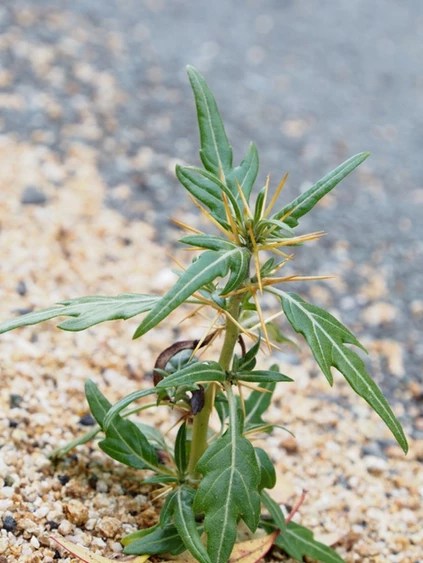
New discoveries were also made on transects that were not burnt in 2020. Two highly invasive non-native grasses, Nassella trichotoma and Eragrostis curvula were recorded in road plots of Kosciuszko Road for the first time. The single plant of Nassella was removed and park staff will try to remove the Eragrostis, which was sadly too abundant for us to tackle. Both of those species were already known in the park (from lower elevations) but we also recorded two non-native species that had not been recorded in or near the park before: Plantago coronopus and Xanthium spinosum. The populations we found appear to be the highest recorded in Australia (with the Plantago usually found near the coast). We pulled out all of the Xanthium plants (carefully – it is a vicious species). It was an excellent example of how non-native plants can jump to a mountain site rather than move slowly along the road. The roadside verge where it was growing had recently been reshaped with imported gravel, clearly from a lowland area containing Xanthium seed.
Juvenile Xanthium spinosum plant growing in imported gravel on a road verge in Kosciuszko National Park
Our most important find was in an unburnt native vegetation plot, where we located a small population of the critically endangered orchid, Pterostylis oreophila. This was the first new record in almost 20 years and brings the number of extant populations in New South Wales to three.
A flower of the critically endangered orchid Pterostylis oreophila
A new paper published in the Journal of Ecology finds that alpine plants display relatively little variation within their species. This paper, lead by Christen Rixen from the WSL Institute for Snow and Avalanche Research SLF in Davos, Switzerland, is a collaborative effort between scientists in Australia, New Zealand and China, and includes RCAAE researchers John Morgan, Susanna Venn and Adrienne Nicotra. This finding that species display little variation could put them at a disadvantage when it comes to climate change, as more variable generalists growing at lower elevations could respond faster and better and push out the specialists.
Climate change affects plants: warmer or wetter summers, for example, could enable them to grow faster and reproduce more successfully. While this may seem like a good thing, the reality is more complex and the implications are far from clear. That’s because not all plant species are equally adept at exploiting such changes to their growing conditions. Experts fear that generalists and common species will benefit most and so displace rare species and specialists adapted to inhospitable habitats (see also Plants are conquering Europe’s summits at an ever faster rate).
In the study, the researchers examined ‘traits’ in 66 plant species. These are characteristics that can vary among individuals of the same species, such as the plant’s height. Such traits also perform important functions in the natural world. For example, taller specimens benefit from more sunlight and produce more biomass.
The researchers suspect that plant species with a high level of trait variation are generally better able to respond to changes in their environment since whatever form the change takes, some specimens will already be adapted to cope with it.
Fieldwork in the Australian Alps. Photo: Christian Rixen, SLF
Rixen and his colleagues examined seven selected traits for each plant species (including height, leaf area and whether the plant produces flowers) as well as the distribution of the species along elevational gradients on mountains in China, Australia, New Zealand and Switzerland. The analyses paint a consistent picture in all the regions investigated:
Plant species that prefer to grow at lower elevations display great trait variation.
Plant species found at all elevations also exhibit great trait variation.
Species that favour very high elevations show little trait variation.
So, if variation is indeed a key factor for rapid and successful adaptation to climate change, then alpine specialists run the risk of falling behind and being squeezed out by more ubiquitous species and generalists.
Christian Rixen and his colleagues are continuing their research with long-term observations of alpine flora in Switzerland and worldwide. However, as well as observational studies, complex experiments are needed to find out whether their basic hypothesis is really correct. In a few years’ time, the results will show whether high trait variation is indeed a success factor for adapting to climate change.












 Research Centre for Applied Alpine Ecology