John Morgan, Research Centre for Applied Alpine Ecology, La Trobe University
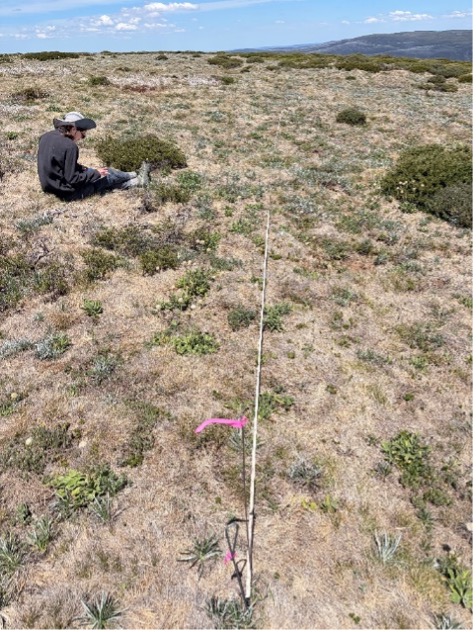
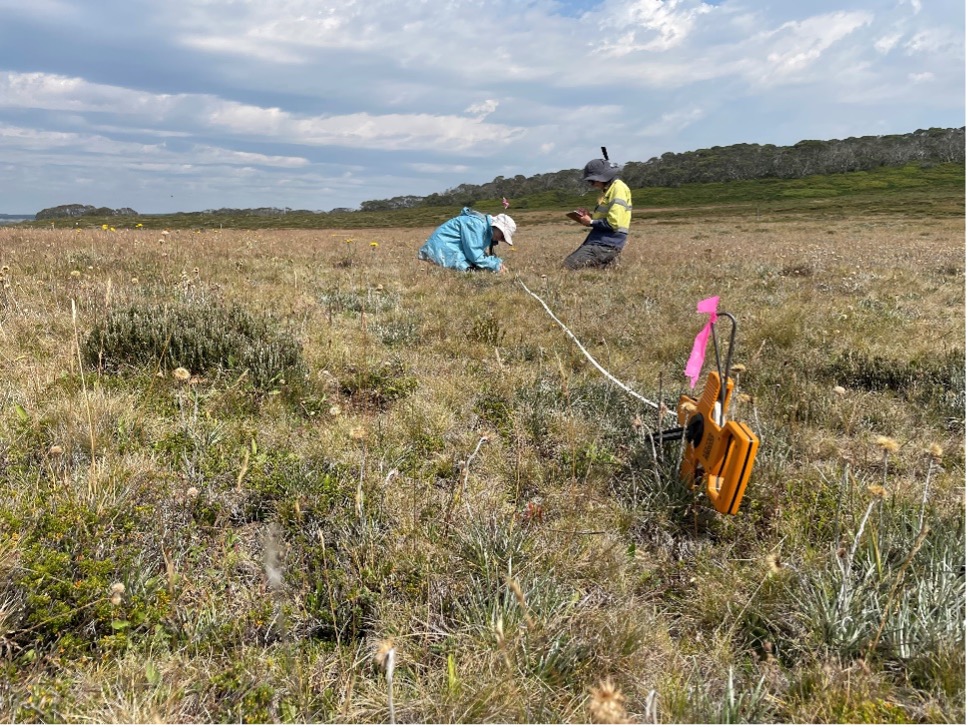
This summer (2025/26), our field program focused on re-measuring long-term plots across the Bogong High Plains, targeting Poa grasslands and gravelly pavement herbfields. These resurveys are part of one of Australia’s longest-running alpine monitoring efforts, allowing us to track not just whether ecosystems are changing, but how fast and in what direction.
Alpine ecosystems in Australia host some of the country’s most enduring ecological datasets. The best known are Maisie Carr’s grazing exclosure plots—now more than 80 years old and recognised under the Victorian Heritage Act for their outstanding scientific value. Less widely appreciated is a broader network of permanent plots established from the early 1980s across grasslands, herbfields, and snowpatch communities. These sites are revisited periodically to quantify changes in plant cover, species composition, and bare ground. While a single survey provides a snapshot in time, it is the accumulation of observations over decades that reveals trajectories of change. Long-term datasets allow us to distinguish directional trends from short-term variability, identify thresholds or tipping points, and estimate rates of change that are otherwise invisible. This is particularly important in alpine environments, where responses to climate and disturbance can be slow, episodic, or lagged.
In 2025/26, resurveys revealed substantial drought-related dieback in Poa grasslands. Interpreting these changes is not straightforward: distinguishing the effects of heat and moisture stress from insect damage depends critically on long-term, repeated observations. Without these datasets, attributing cause would be largely speculative. Instead, the historical record provides context – whether current changes are unprecedented, how quickly they are unfolding, and whether recovery is occurring.
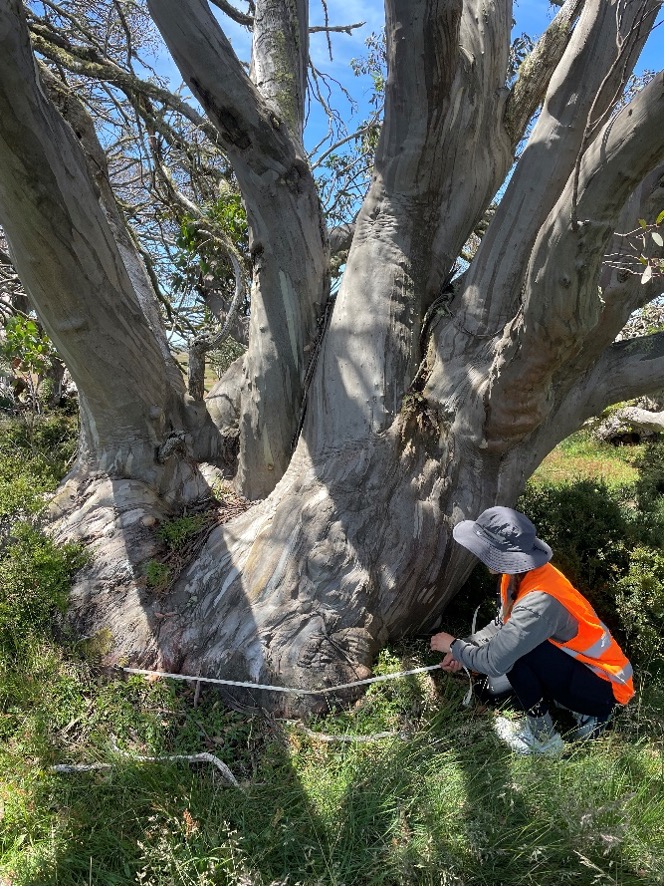
Monitoring has also recently expanded into long-unburnt (“old growth”) stands. Here, we are documenting their landscape position, fuel context, and current condition, including insect dieback impacts. Coupled with long-term records, these data help place current observations within a broader temporal and spatial framework, improving our ability to anticipate future change and inform management decisions around fire risk, conservation value, and ecosystem resilience.
This work is coordinated by the Research Centre for Applied Alpine Ecology, with invaluable contributions from summer research students, including Courtney Meacham and Andreas Molnar. Maintaining and extending these long-term records remains essential for understanding—and managing—change in the Victorian Alps.